

Nine o'clock on a Wednesday. You have two emails you didn't answer, a lunchbox that needs washing, and about forty minutes before you want to be asleep. Sitting down with a journal is not going to happen.
So it doesn't. Thursday slips by the same way, and by Sunday the notebook is somewhere under a pile of post, and the habit that was supposed to make you feel steadier has become one more thing you are behind on.
The answer isn't a longer evening or a stronger dose of willpower. It's a shorter session — one that fits inside the ten minutes you actually have, so it survives a bad week instead of being the first thing to go.
Why Ten Minutes Is Enough
A journal that takes an hour is a journal you keep on holiday. A journal that takes ten minutes is one you keep on a Tuesday in November, when you're tired and the bins still need putting out.
Short sessions work for three reasons. They cost so little that skipping them isn't tempting, and a poor ten minutes is still ten minutes you don't have to make up later. They suit the state you're genuinely in at the end of a day — tired, distractible, low on words. And because they happen often, patterns surface: the same frustration every Monday, the same lift in mood when a certain meeting gets cancelled, the same three worries taking turns.
You are not writing something worth reading. You are getting the day out of your head and onto paper so you can sleep and start tomorrow without carrying all of it.
The Three Questions That Do the Work
The structure is deliberately plain. Same three questions, same order, every night.
1. Clear: what actually happened?
Facts first, in as few words as you can manage. Not "a stressful day" but "presentation moved to Thursday", "argument about the car", "forgot to reply to Sam". Bullet points are fine — this section is a list, not prose. Naming things plainly stops them from swelling into a general mood.
2. Notice: what did it stir up?
Now label the feeling. Irritated, flat, relieved, anxious, pleased, resentful. Add a rough sense of size if it helps: "annoyed for about an hour after that email" tells you far more than "work was fine". Don't try to work out where the feeling came from at this time of night. Just record it.
3. Choose: what is one thing for tomorrow?
One. Not a plan, not a schedule. Pick the single action that would make tomorrow easier or better: send the reply, book the appointment, walk before lunch, decline the extra shift. Write it as a task, not a wish. "Be less stressed" is not a task. "Leave the house by 8.15" is.
The Ten-Minute Evening Checklist
Set a timer before you start. The timer is doing the work here, not your self-control. Then run through this sequence:
- Timer on, phone face down. Not on silent — face down, out of reach. Ten minutes is short enough that nobody needs you for it.
- Date the page and write three words for the day. "Long, useful, frayed." It gives you an entry point when you feel blank.
- Brain-dump the day as bullets. Six or seven lines, no full sentences. Roughly three minutes.
- Circle the item with the most charge. Usually it's the one you'd rather not write about.
- Underneath it, write one feeling word and one sentence about what it was really about. Two minutes at most.
- Note one thing that went right. Small counts. The bus came, the difficult call was shorter than expected, you ate lunch away from your desk.
- Write tomorrow's single action. One line, starting with a verb.
- Glance at yesterday's last line only. Not the whole page, and not last month's. Enough to see whether you followed through.
- Stop when the timer goes, even mid-sentence. An unfinished thought is a reason to come back tomorrow.
If you have twenty minutes, add a fourth question: what am I carrying that isn't mine to carry? If you have four minutes, keep only steps two, three and seven.
Prompts for Nights When Your Mind Is Blank
Some evenings you'll sit down and find nothing there. That's normal, and it usually means the day was unremarkable rather than empty. Pick one of these and write for two minutes:
- What took more energy than it deserved today?
- What did I put off, and what did putting it off actually cost me?
- Who made today easier? (Write it down — then consider telling them.)
- Which hour was the best one, and what was I doing?
- What did I say yes to that I wanted to say no to?
- What went better than I expected?
- If tomorrow had one spare hour in it, what would I spend it on?
- What do I want to remember about today in a year's time?
- What is the smallest thing that annoyed me, and is that really what it was about?
What to Leave Out of a Quick Session
Ten minutes disappears fast, and a few habits eat it whole. Don't rewrite sentences to make them sound better — the page isn't a draft. Don't read back through weeks of entries; that's a different activity for a different evening, preferably with a cup of tea and no time limit. Don't build colour-coded mood trackers unless tracking genuinely helps you, because the setup quietly becomes the habit instead of the writing.
Skip the searching questions too. Evening is for recording, not for resolving. Analysis is better done in daylight, on paper or in conversation, when you have the energy to be honest rather than merely tired.
If You Miss a Night, or Three
Don't backfill. A missed night costs you nothing; a guilt-driven catch-up session on Sunday costs you an evening and often ends with the notebook abandoned altogether. Pick it up tonight, date it today, carry on as though the gap weren't there. If you miss a fortnight, write one line about the fortnight and start again.
The point was never the streak. It was having somewhere to put the day.
Tonight's Ten Minutes
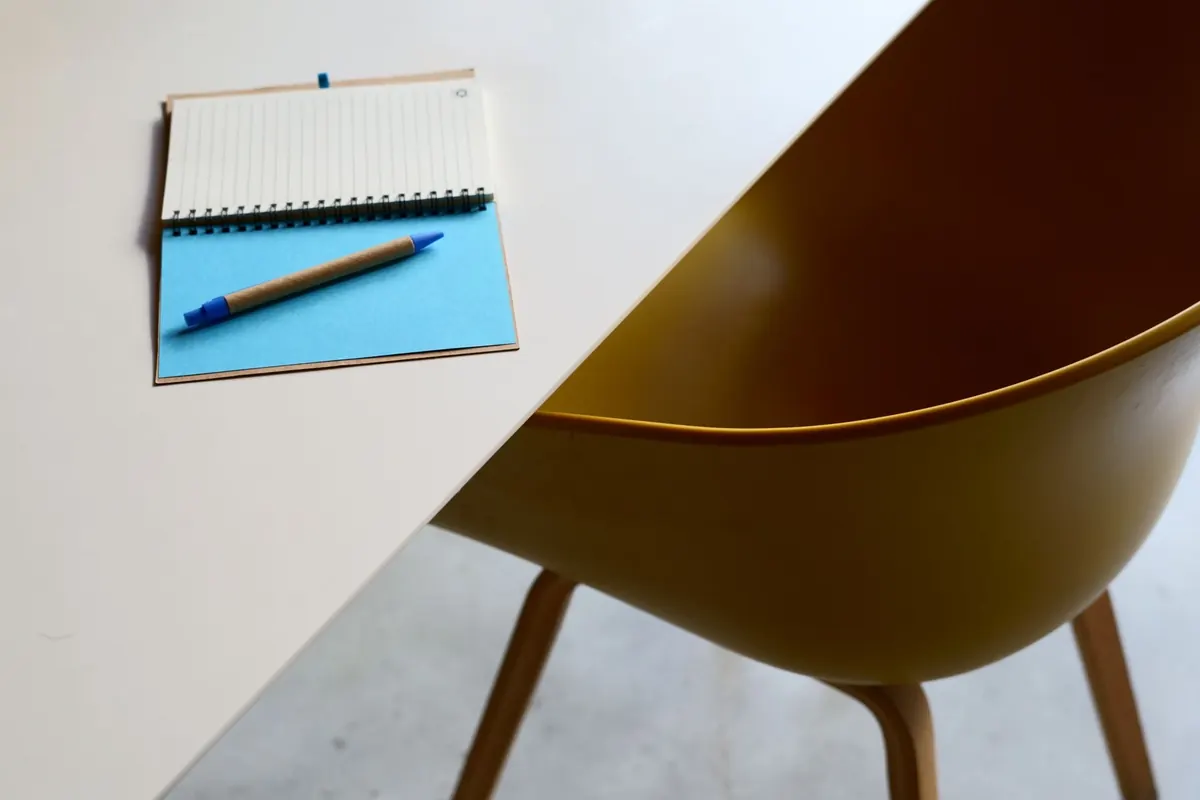
Put the notebook where you'll fall over it — by the kettle, on the pillow, on top of the laptop you'll close at nine. Keep a working pen with it, and keep the same three questions at the top of the page until they're automatic.
When you sit down, don't plan the entry. Write the date, three words, and the bullets. The rest tends to follow on its own.
One sensible note: if the same heavy subject fills the page night after night and writing isn't shifting it, that's worth mentioning to your GP or a counsellor. A journal is a good place to put a thought; it isn't a substitute for support.
Photo: Budget Bizar / Pexels